
Reasons
- Proof of extraction efficiency
- Validation of new test methods
- OEM and customer requirements
- Securing reproducible results
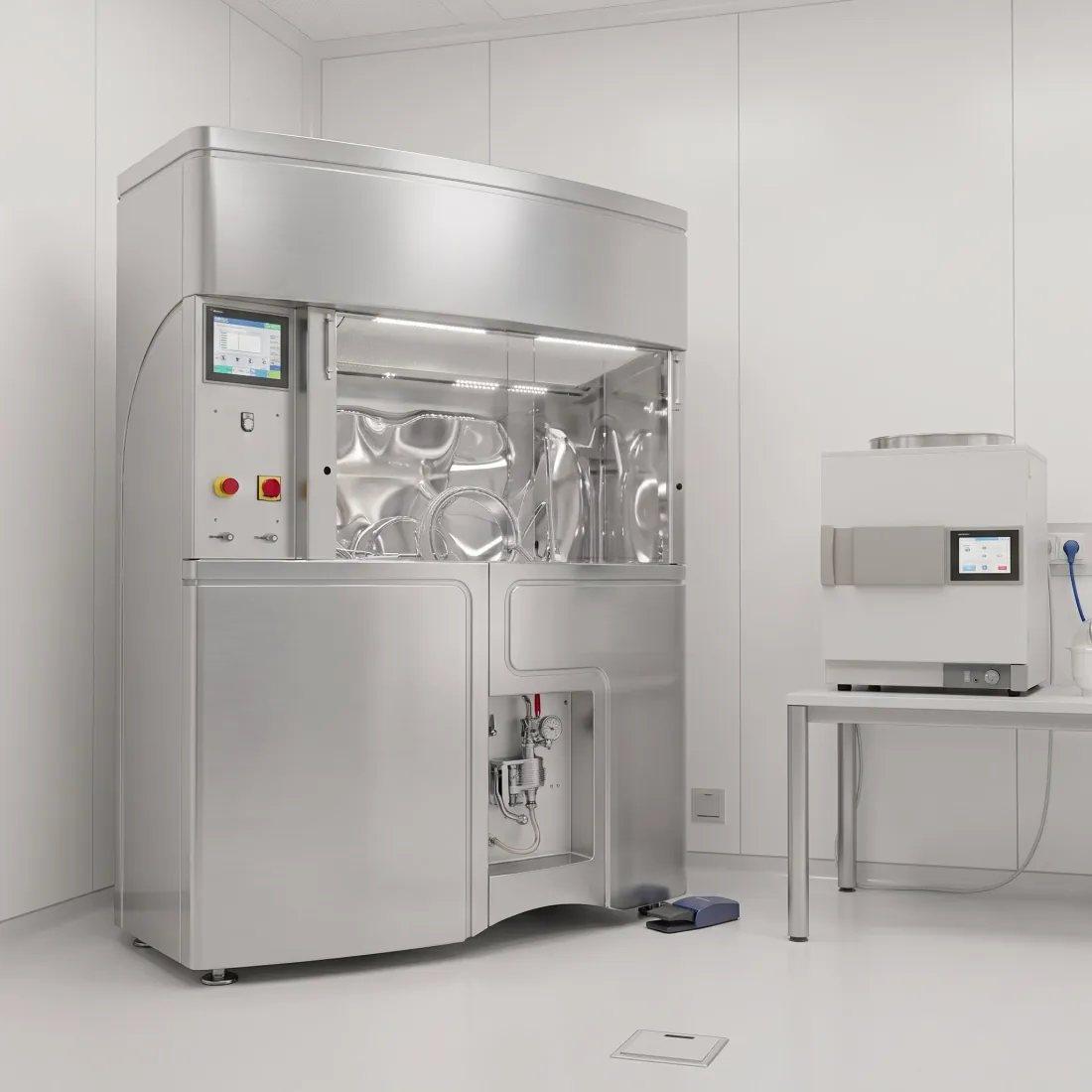
Defining extraction parameters
Validation and proof of extraction efficiency for residual contamination analysis according to VDA 19.1, ISO 16232 and OEM and customer test requirements.
The decay measurement verifies extraction efficiency. Repeated extractions prove that the selected test method captures the particles on a component sufficiently and delivers reproducible results.
Extract the component with defined parameters and evaluate the filter.
Extract the same component again with the same parameters and evaluate.
Repeat until the amount of particles in the last extraction is small enough relative to the total. The criterion is set by the standard or customer specification.
Document the parameters and define them for series testing.
Depending on component geometry, material, type of contamination and customer requirement, we develop suitable extraction methods and validate them by decay measurement. The results are documented and serve as the basis for future series testing.
that the selected extraction method captures the particles on this component sufficiently and delivers reproducible results.
the definition of limit values. Limit values come from your drawing, specification or customer requirement.
Methods developed in-house or customer-specific methods are not automatically part of the scope of accreditation. We tell you in advance what is accredited.
Scope of accreditationFAQ
In a decay measurement the same component is extracted several times with the same parameters and each extraction is evaluated separately. If the amount of particles found decreases sufficiently, the method captures the particles sufficiently. The applicable standard or customer specification defines the termination criterion.
For new parts and assemblies, product changes, new extraction methods, customer-specific requirements and OEM approvals.
Documented extraction parameters that can be used as the basis for future series testing.
We support you in developing, validating and documenting suitable test methods according to VDA 19.1 and ISO 16232.