
2015 and 2026 editions
We are accredited to VDA 19.1 in the 2015-03 edition. A 3rd revised edition has been available since February 2026. Your specification states which edition applies; we clarify this before we confirm the order.
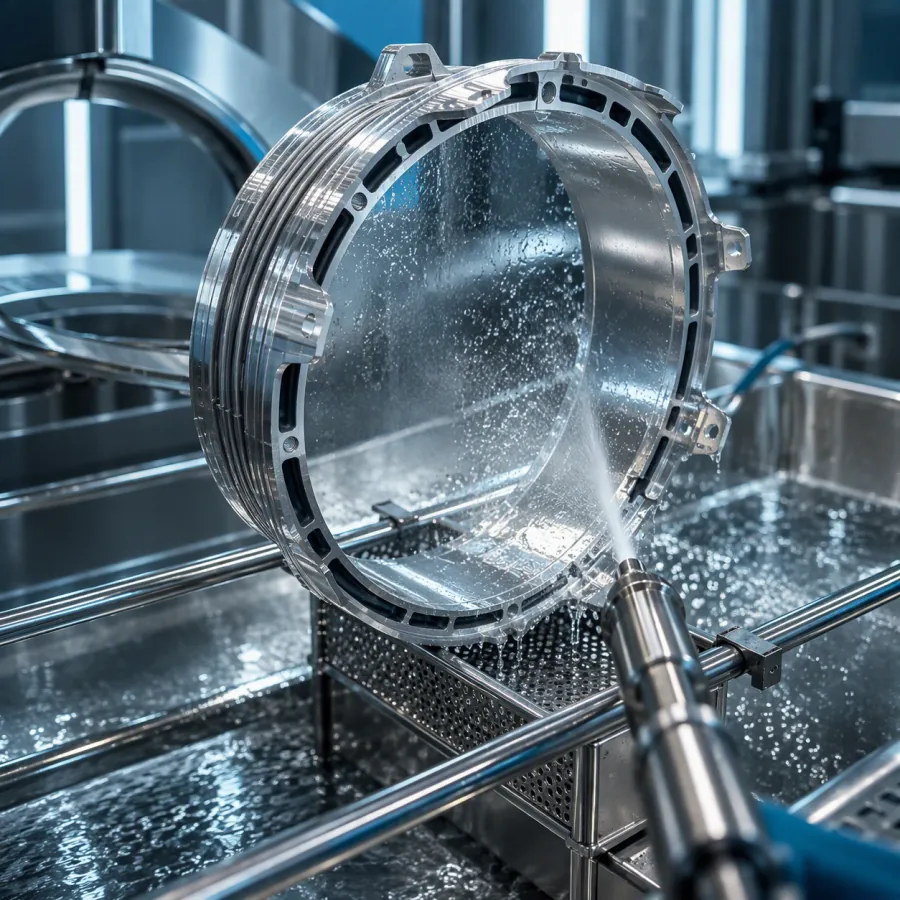
VDA 19.1 testing
Technical cleanliness testing according to VDA 19.1 for parts, assemblies and technical components in a DAkkS-accredited laboratory. Send the part or drawing, agree the scope, receive the test report.
Service
VDA 19.1 describes methods for determining and assessing particulate contamination on functionally relevant automotive components. It is the basis for securing technical cleanliness in automotive, mechanical engineering and industry.
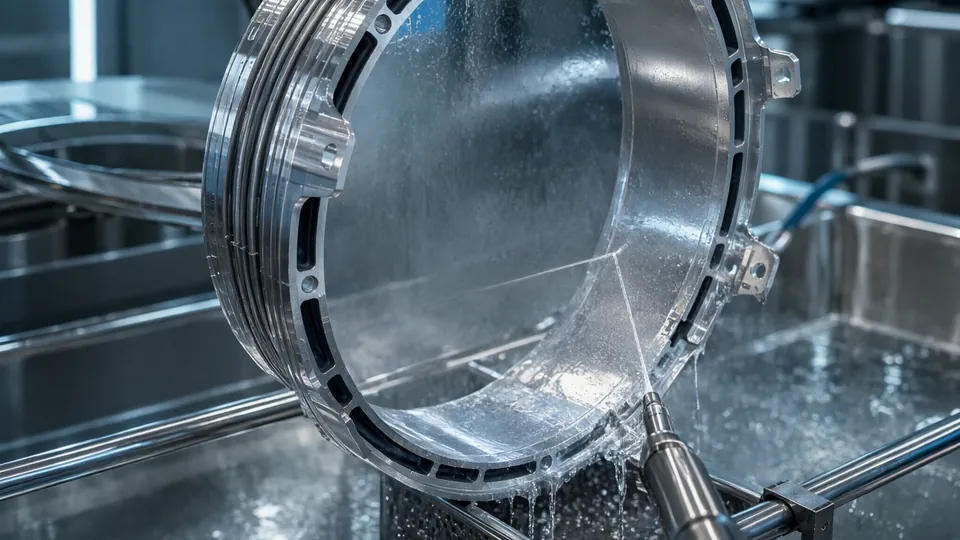
Even small amounts of particulate contamination can impair the function of sensitive components and lead to increased wear, malfunctions or failures.
Typical reasons for testing are short-notice questions, ongoing series projects, complaints and the qualification of new parts and processes. For new parts and extraction methods, a decay measurement is recommended first.
We are accredited to VDA 19.1 in the 2015-03 edition. A 3rd revised edition has been available since February 2026. Your specification states which edition applies; we clarify this before we confirm the order.
Both describe extraction, analysis and documentation of particulate contamination. VDA 19.1 comes from the German automotive industry, ISO 16232 is the international standard.
ISO 16232 testingMany manufacturer-specific requirements are methodically based on VDA 19.1 and are implemented according to the applicable test specification.
Testing to factory standardsFour steps to your test report
Share the component, drawing, limit value, standard or customer requirement.
Together with you, TecClean determines which test scope is required and technically feasible.
Send the sample or test lots to TecClean, securely packed.
TecClean carries out the agreed analysis and provides the test report.
For suitable parcel-sized samples: optional express processing within 1 to 2 working days. The day of delivery is not counted.
FAQ
Particulate contamination on parts, assemblies and technical components: extraction, filtration, gravimetric analysis and light-microscopic particle classification with documentation as required by the standard.
The 2015-03 edition, with extraction methods E.1 to E.4 and analysis methods F.1 to F.3 (filtration, gravimetry and microscopy with light microscope only). A 3rd revised edition has been available since 2026; your specification determines which edition applies to your order.
Limit values usually come from your drawing, your customer specification or factory standard. We test to the agreed specification and document the results in the test report.
Part designation, drawing or limit value, number of samples and the desired date. We clarify any missing information with you.
Tell us what you know about your component. Or call the laboratory directly: +49 7544 968 98-15.